
Our vision
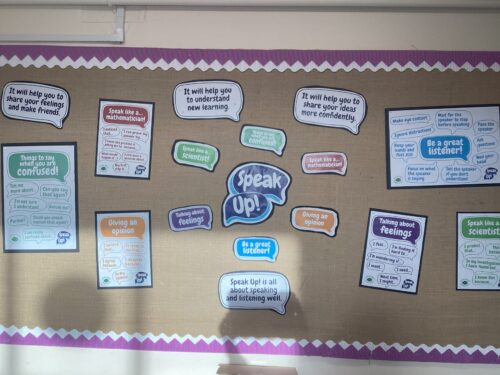
At SCPS, we believe every child deserves a voice and we want to create confident communicators. Through our Speak Up Oracy Programme, we help pupils become confident speakers, good listeners and respectful communicators. By building oracy into all aspects of the school day, we aim to give our pupils the physical, linguistic, cognitive and social/emotional skills to enable them to express themselves clearly and engage with others effectively.
What is Oracy?
Oracy is the ability to the ability to speak and listen effectively. It includes:
- Speaking in full sentences
- Listening carefully to others
- Using ambitious vocabulary
- Sharing ideas and opinions
- Taking part in discussions and presentations
Why is Oracy Important?
Oracy plays a vital role in learning, wellbeing and future success. By learning to talk, and learning through talk, children develop the skills they need to thrive in school and beyond. Research shows that oracy has a particularly strong impact on children’s learning in the primary years. Strong speaking and listening skills help children to:
- Improve reading and writing;
- build confidence and self-esteem;
- develop social and emotional skills;
- access the full curriculum
- and, most importantly, succeed.
Our Approach at SCPS
Oracy is embedded across school life. Our Speak Up programme is being introduced in phases to ensure high-quality teaching and consistent practice.
We will continue to focus on:
Learning to Talk
Children are taught how to speak and listen well through clear routines, sentence structures and discussion rules.
Learning Through Talk
Pupils use talk to explain ideas, solve problems, take part in group work and present learning.
Vocabulary Development
We teach key vocabulary across all subjects so children can:
- Understand new words
- Use language accurately
- Express ideas clearly
- Take part in high-quality discussions
Oracy Across the Curriculum
Oracy is used in every subject. For example:
- In Science, children explain predictions and results using sentence stems
- In Topic work, pupils take part in discussions, debates and presentations
This helps pupils develop subject knowledge and communication skills together.
Performance and Speaking Opportunities
Children regularly take part in speaking and performance activities including:
- Poetry performances and recitals
- Class presentations
- Drama and role-play (including LAMDA)
- Public speaking and debating opportunities
These experiences help children build confidence and enjoy using their voice.
How You Can Help at Home?
You can support your child by:
- Talking about their day
- Asking open-ended questions
- Reading aloud together
- Encouraging children to explain their thinking
- Modelling good listening

 © 2026 Sonning Common Primary School